
Addressing the long-standing clinical challenge of protecting the penumbra from secondary metabolic collapse, L0beramisal is a novel, intravenous dual-target neuroprotective agent developed by NeuroDawn Pharmaceutical for treating acute ischaemic stroke (AIS). It works by inhibiting the PSD-95–nNOS interaction and activating $\alpha$2-containing GABAAR to reduce brain injury.
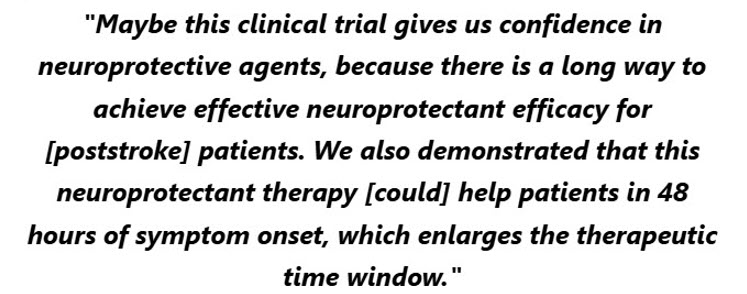
Traditionally, neuroprotective strategies have failed in clinical trials due to their narrow focus on single pathways, such as glutamate excitotoxicity, but l0beramisal distinguishes itself by simultaneously modulating multiple cascades of neuronal death. Data presented at the 2026 International Stroke Conference by Dr Shuya Li confirms that this investigational therapy successfully shields vulnerable brain cells during the critical forty-eight-hour window following the initial vascular event. By utilising a dual-mechanism approach, the drug appears to stabilise the blood-brain barrier while concurrently inhibiting the oxidative stress and inflammatory responses that typically follow reperfusion. This multifunctional capacity is essential because the ischaemic cascade is a complex, multi-layered process where single-target interventions are often bypassed by redundant cellular pathways leading to apoptosis.
The Phase 3 clinical trial results indicate that the administration of l0beramisal intravenously for ten consecutive days leads to significantly superior functional outcomes when compared to a placebo. Participants who commenced treatment within forty-eight hours of symptom onset demonstrated higher scores on the modified Rankin Scale, suggesting a meaningful reduction in long-term disability and a higher degree of independent living. This ten-day intravenous protocol is designed to provide sustained support to neural tissues as they transition from the hyperacute stage of injury into the early phases of repair. Furthermore, the ability of l0beramisal to work in tandem with existing reperfusion strategies, such as mechanical thrombectomy and thrombolysis, suggests it may act as a vital adjunct that preserves tissue until blood flow is restored. This synergy is particularly important for patients who experience ‘reperfusion injury’, where the sudden return of oxygenated blood can paradoxically cause further damage to weakened neurons.
From a neurorehabilitation perspective, the stabilisation of neural tissue in the first two days post-stroke provides a more robust physiological foundation for subsequent recovery. ARNI Stroke Rehab UK emphasises that if more brain tissue is salvaged in the acute unit, the potential for successful neuroplasticity-driven training is vastly increased. When the primary motor cortex or descending corticospinal tracts are protected from secondary infarct expansion, survivors are better positioned to engage in high-repetition, task-specific exercises earlier in their journey. Therefore, loberamisal doesn’t ‘replace’ rehabilitation but rather enhances the substrate upon which physical therapy operates. The transition from acute neuroprotection to intensive, movement-based retraining is likely to become the new standard of care as these pharmacological advancements reach the bedside. If these results are standardised across stroke units, we may see a significant shift in the trajectory of recovery, moving away from managing permanent deficits toward a model of active neural preservation and functional restoration.