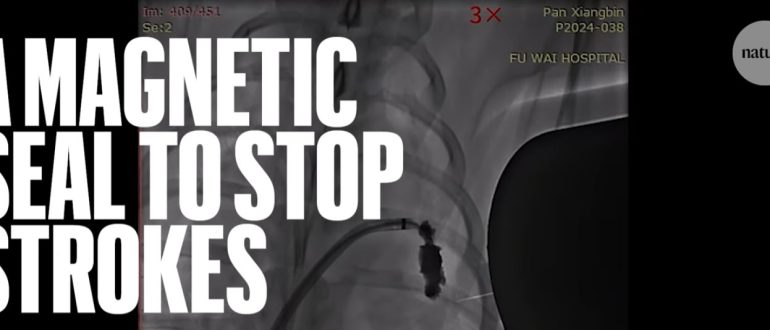

The clinical landscape of stroke prevention is currently witnessing a significant shift towards bioengineering solutions that target the left atrial appendage, a common site for thrombus formation in patients with atrial fibrillation. A pioneering study published in the journal Nature has detailed the development of a magnetic hydrogel designed to be injected into the heart to function as a biocompatible plug. This innovative substance is formulated to remain fluid during the injection phase but undergoes a rapid phase transition to a solid state once positioned within the target cardiac architecture. By occluding the left atrial appendage, the hydrogel effectively prevents the migration of blood clots into the systemic circulation, thereby reducing the risk of ischaemic events. Research conducted on animal models, specifically rats and a porcine subject, has demonstrated that the gel adheres securely to the heart wall without causing significant inflammation or structural damage.
The technical complexity of this magnetic gel allows for precise positioning using external magnetic fields, ensuring that the occlusion is complete and stable over time. Traditional methods for closing the left atrial appendage often involve invasive surgical procedures or the permanent implantation of metallic devices which can carry risks of erosion or incomplete sealing. This hydrogel alternative offers a minimally invasive pathway that could potentially be performed under local anaesthetic, significantly expanding the eligibility criteria for elderly or frail patients. Furthermore, the material is engineered to integrate with the surrounding cardiac tissue, promoting a natural healing response that further stabilises the blockage.
As the global burden of stroke continues to rise, such biotechnological advancements provide a critical second line of defence for those who cannot tolerate long term anticoagulant therapy. The integration of these advanced materials into human clinical trials will definitely require rigorous assessment of long term stability and potential degradation products within the bloodstream. Initial results suggest that the magnetic properties do not interfere with standard imaging techniques like magnetic resonance imaging, which is a vital consideration for future patient monitoring. ARNI Stroke Rehab UK says that while these preventative cardiac interventions represent a monumental leap in reducing the primary incidence of ischaemic injury, the subsequent focus must always remain on intensive physical retraining to maximise the functional independence of those already living with the effects of a stroke…
Hyun, J., Kim, J., Wang, S. et al. (2026). Magnetogel for minimally invasive occlusion of the left atrial appendage. Nature, 639, 94–101.