
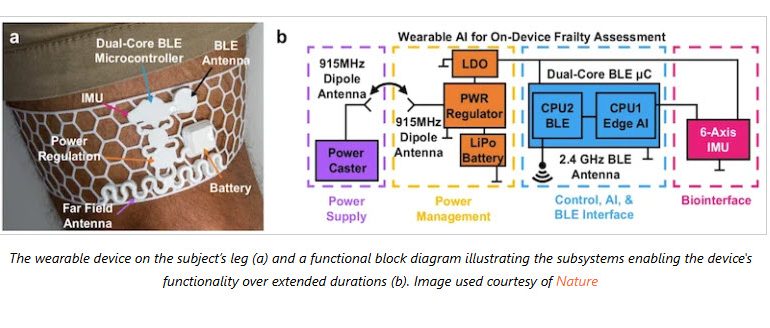

The clinical identification of frailty in the ageing population has historically been reactive, typically occurring only in the aftermath of a catastrophic event like a stroke, fall or other acute hospitalisation. To address this diagnostic lag, researchers at the University of Arizona have engineered an innovative wearable device designed to facilitate the early detection of frailty-related biomarkers through continuous physiological monitoring. This prototype, constructed as a lightweight 3D-printed mesh sleeve worn around the thigh, serves as a sophisticated biomechanical sensor suite. By focusing on the thigh, the device captures high-fidelity data regarding the primary muscle groups responsible for locomotion and balance, allowing for the precise measurement of acceleration, gait symmetry, and step variability. These metrics are critical, as subtle deviations in gait consistency often serve as the earliest indicators of physiological decline and increased fall risk long before clinical symptoms become overt to the patient or practitioner.
The technical architecture of the device distinguishes itself from conventional wearables through the integration of edge computing and artificial intelligence. Rather than transmitting raw, high-bandwidth data to a centralised server… a process that is often energy-intensive and raises privacy concerns… the device utilises an on-board artificial intelligence algorithm to synthesise and analyse the data in real time. This local processing capability reduces the volume of data transmission by approximately 99 per cent, transmitting only the summarised clinical insights to the healthcare provider. This efficiency not only extends the battery life of the wearable but also ensures that the summarized results are immediately actionable. Such a reduction in data latency is essential for preventative intervention strategies, as it allows clinicians to monitor the elderly population within their own domestic environments without the logistical burdens associated with continuous raw data streams.
Furthermore, the materials science involved in the development of the 3D-printed mesh ensures that the device is both durable and comfortable for long-term wear, which is a significant factor in patient compliance among the elderly. By quantifying frailty through objective longitudinal data rather than intermittent subjective assessments, this technology promises to transform the current geriatric care model into a proactive framework. The ability to observe fluctuations in gait symmetry and acceleration over weeks or months provides a granular view of a stroke survivor’s functional trajectory. This paradigm shift towards point-of-care diagnostics enables the implementation of targeted physical therapies or nutritional interventions at the earliest sign of frailty, effectively mitigating the risk of debilitating incidents and improving the overall quality of life for the ageing population.