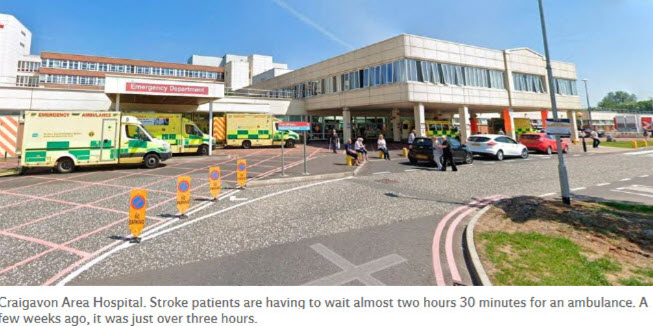

The ambulance handover crisis in Northern Ireland has reached a terrifying peak, with recent data revealing that stroke patients were forced to wait an average of two hours and 29 minutes last week just for paramedics to arrive. This systemic collapse resulted in the loss of 11,072 hours of emergency capacity in December alone, effectively removing thirty ambulance shifts from the roads every single day! For a stroke survivor, these delays are of course far more than mere statistics; they represent a catastrophic erosion of the golden hour where brain tissue is most salvageable and medical intervention is most effective. The suffering is compounded for those trapped on unsuitable trolleys for several hours, facing secondary risks such as acute dehydration and pressure damage. Furthermore, staggering data now indicates that any patient over the age of 80 conveyed to hospital faces an average stay of fifteen days, regardless of their initial condition… highlighting how prolonged waits in the pre-hospital phase can derail long-term outcomes.
The situation in England mirrors this logistical nightmare, with the latest NHS England Ambulance Quality Indicators showing that Category 2 calls, which include suspected strokes, frequently miss the 18-minute national target by a significant margin. In some regions, average response times have regularly exceeded 45 minutes, with ‘handover play’ at busy Emergency Departments further stalling the journey to life-saving thrombolysis or thrombectomy. When the blood supply is restricted, the brain loses approximately 1.9 million neurons every minute, making these bureaucratic and logistical hurdles a direct threat to a survivor’s future independence and functional capacity. The disparity in care depending on one’s postcode has become a central concern for the Stroke Association UK, as the window for effective treatment is narrow and unforgiving.
Given these harrowing delays, many families are left debating the desperate question of whether they should bypass the emergency services and drive a loved one to the hospital themselves. While the temptation is immense when faced with a three-hour wait, clinical advice remains weighted towards waiting for an ambulance because paramedics can begin the triage process, provide oxygen, and pre-alert the specialist stroke team. However, as the BBC News Health report has highlighted in recent coverage of the Northern Ireland crisis, the ‘stay put’ advice is becoming increasingly difficult for the public to reconcile with the reality of the wait. If a family chooses to drive, they risk the patient deteriorating in a vehicle without medical support or arriving at a hospital that lacks a hyper-acute stroke unit. Nevertheless, until the systemic collapse of handover capacity is addressed, the choice between waiting hours for a siren or taking immediate action remains a harrowing and unfair dilemma for the British public.