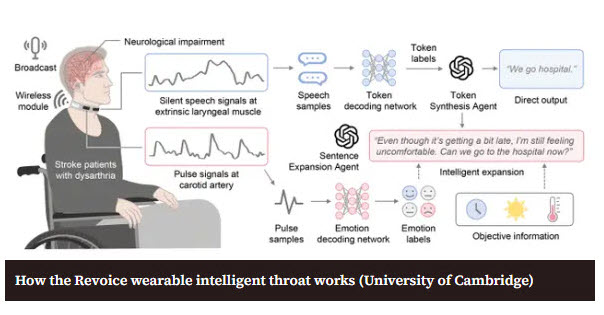

In a significant advance for neuro-rehabilitation and assistive communication, a multidisciplinary team of experts at the University of Cambridge has introduced Revoice, a non-invasive technological interface designed to restore natural speech in patients suffering from severe aphasia. Historically, the pursuit of high-fidelity brain-to-text or brain-to-speech translation has relied heavily on invasive neuroprosthetics, requiring the surgical implantation of electrode arrays directly into the motor cortex or Broca’s area. While effective in controlled laboratory settings, the inherent risks of neurosurgery and potential for long-term tissue scarring have limited the widespread clinical adoption of such devices. Revoice bypasses these surgical requirements by utilising a sophisticated array of high-resolution external sensors coupled with deep-learning algorithms that interpret neural intent and subtle articulatory movements without penetrating the skull.
The core innovation of the Revoice system lies in its ability to synthesise speech that preserves the patient’s original vocal identity, rather than producing the sterile, robotic tones associated with traditional speech-generating devices. By leveraging generative artificial intelligence, the software analyses residual vocal data or pre-stroke recordings to reconstruct a personalized digital voice model. When the survivor attempts to speak, the system captures sub-vocal signals and neural impulses, translating them into fluid, real-time audio output. This represents a paradigm shift from simple keyword selection toward the restoration of natural, conversational flow. For stroke survivors, this means may well mean that the cognitive burden of communication is drastically reduced, allowing for a more intuitive and emotionally resonant connection with family members and healthcare providers.
The clinical implications of this development in 2026 are profound, particularly for the long-term management of post-stroke aphasia. By providing a non-invasive alternative to brain implants, Revoice lowers the threshold for accessing advanced neuro-technology, making it a viable option for a broader demographic of patients, including those for whom surgery is contraindicated. Furthermore, the technology serves as a powerful rehabilitative adjunct; by providing immediate auditory feedback that matches the survivor’s intent, it can reinforce the neural pathways involved in language processing and speech production. As the University of Cambridge begins the transition from clinical trials to broader medical application, Revoice now shows the potential of combining non-invasive sensing with advanced AI to dismantle the barriers of communication for stroke survivors worldwide.