

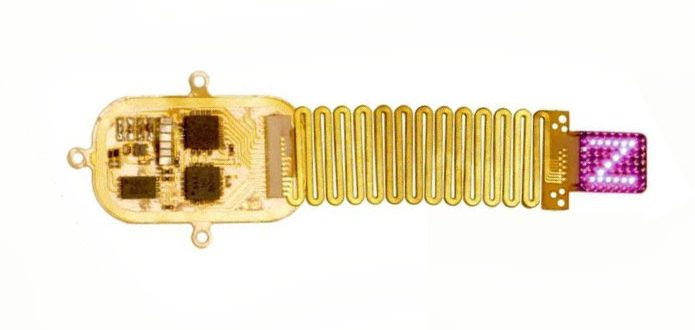

Imagine a future where stroke survivors can relearn brand-new signals and regain function using advanced technology that talks directly to their brain. Scientists have just achieved an incredible breakthrough: they’ve created a revolutionary, soft, wireless implant that uses tiny, gentle flashes of light to send information straight into the brain. The approach moves around the body’s traditional sensory pathways and instead interacts with neurons directly.
Published 4 days ago in Nature Neuroscience, the system is soft and flexible and fits beneath the scalp while resting on the skull. From this position, it can project carefully programmed light patterns through the bone to stimulate neurons across large areas of the cortex. During testing, scientists used tiny bursts of patterned light to activate specific groups of neurons in mouse models (these neurons are genetically modified to respond to light). The mice quickly learned that certain light patterns represented meaningful cues and used them to guide behaviour. Even though no normal senses were involved, the animals used these artificial signals to make decisions and complete behavioral challenges.
The fact that the implant is soft and wireless is also a key technical advantage; it reduces the likelihood of tissue damage and makes it much more practical for long-term use compared to rigid, wired alternatives. While this is still a cutting-edge research finding and not yet available for clinical use, researchers see broad potential for this approach. It could eventually support prosthetic limbs by supplying sensory feedback, deliver new types of artificial input for future hearing or vision devices, help manage pain without drugs, enhance recovery after injury or stroke, and even support brain-controlled robotic limbs.