99% of clinicians currently fail to assess proprioception loss. This scientific breakthrough from the University of Delaware highlights that This vital sense of limb position is a critical yet frequently overlooked component of functional recovery.
Associate Professor Jennifer Semrau and doctoral candidate Joanna Hoh tackled this issue by utilising the =a robotic exoskeleton called KINARM (pictured), and they can now isolate sensory deficits even in survivors who lack the motor ability to move their affected arm.
This single arm measurement technique moves the stroke affected limb robotically while the patient responds with their non affected side to pinpoint the exact detection threshold. Understanding these unique sensory fingerprints is essential because the Neurorehabilitation and Neural Repair journal suggests full functional gains are impossible without sensory restoration.
The study explains that disrupted communication between brain and muscle receptors can make simple tasks like touching one's nose or avoiding a hot stove surprisingly difficult. Addressing these intertwined sensory and motor challenges allows for more tailored therapies that go beyond standard physical exercises.
While this advanced technology remains primarily in high tech research settings, it provides a blueprint for future diagnostic tools in our hospitals: this robotic protocol is currently several years away from NHS standard care as the equipment is currently utilised only in specific research facilities at the moment. 🏥🧠🤖✨🦾
... See MoreSee Less
.Stroke recovery may last years. Every day is a chance to get better. Even if you feel that you have plateaued, most likely are wrong, push through and tell yourself tomorrow is another chance to recover some more. So never give up.
www.arni.uk.com #strokerehabilitation #strokerecoveryexercises #exerciseafterstroke #neurorehab #strokerecovery #Neuroplasticity #neurorehabilitation #strokesurvivorscan
... See MoreSee Less
Breakthrough drug triples stroke treatment window! Recent phase two clinical trials for the novel pharmaceutical LT3001 suggest a monumental shift in emergency care by extending the viable treatment window from four hours to a full day... wow!
While the traditional thrombolytic agent tPA is often restricted by safety concerns and a narrow administration timeframe, this new agent appears both safer and more inclusive for various patient profiles. Dr Thomas Devlin highlights that this development addresses the critical 'time is brain' constraint which currently leaves many survivors without acute medical intervention.
The study indicates that LT3001 might offer a vital second chance for those who do not reach hospital immediately after the onset of symptoms. As lifestyle factors like obesity and hypertension continue to drive stroke incidence, having a robust 24 hour pharmacological option could significantly improve long term recovery prospects.
ARNI Stroke Rehab UK says that for survivors in the UK, routine implementation in the NHS will likely require several more years of rigorous phase 3 testing and NICE cost effectiveness appraisals. This emerging therapy does however represent a real advancement in neurological science... that could eventually redefine standard hospital protocols across the country. 🏥🧠🔬✨📢
www.ar#ARNIstrokerehabt#StrokeResearchk#IschaemicStrokee#neuroscienceu#strokerecoverykeRecovery
... See MoreSee Less
So, the latest data reveals that there's going to be a substantial escalation in stroke prevalence among women (worldwide) over the coming quarter century 📢📈. Data suggests that stroke rates in the female population are expected to rise from 4.1 per cent in 2020 to 6.7 per cent by 2050 as cardiovascular disease becomes an even more critical public health priority 🏥🧬.
This shift is primarily driven by an ageing demographic alongside rising clinical incidences of obesity and diabetes which are now appearing in increasingly younger age cohorts ⚖️🍎. Professor Karen E. Joynt Maddox notes that if current trends persist more than one in three women will succumb to cardiovascular conditions 💸📉.
While traditional risk factors like smoking are declining the projected surge in hypertension to 59.1 per cent represents a significant call to action for preventative healthcare strategies 🩺🚨. Experts emphasise that this trajectory sets up entire generations of girls to develop heart failure or atrial fibrillation at a much younger age than previously observed in historical records 🧩👩⚕️.
Addressing these adverse trends requires urgent intervention focused on metabolic health and sleep quality to mitigate the long term impact of these neurological and cardiovascular challenges 🧠💪.
www.arni.uk#ARNIstrokerehabR#strokepreventionn#womenshealthe#CardiovascularResearche#strokerecoveryovery
... See MoreSee Less
It is your mind-set that will allow you to cope with every difficulty that crosses your self-rehabilitation path.
If you need some help with your rehab then call us on 0203 053 0111 or email support@arni.uk.com We have trainers throughout the country who can help you with your recovery.
www.arni.uk.com
#strokesurvivors #strokerehab #strokeexercise #strokerecoveryexercises
#stroke #strokesurvivors #Neuroplasticity #strokerecovery #strokerehabilitation #strokemotivation
... See MoreSee Less
A fun but quite simplistic poster for you! So, is neuroplasticity just heightened/stoked through just 'doing more reps? Not really. Even now, only a fair amount idea is known about the optimal timing of the different processes and therapeutic interventions and for their interactions in detail.
The average stroke survivor probably only gets (or does) one twentieth of the input they need to put in to increase chances of recovery. So maybe doing LOADS more reps PLUS being cognisant of the point that the goal (finding optimal rehabilitation paradigms) will require an optimal organisation of the internal processes of neural plasticity PLUS the therapeutic interventions in accordance with plastic time windows (which can be highly manipulated anyway in many cases!
All rather tricky! But do take heart: brain plasticity can lead to an extreme degree of spontaneous recovery and rehabilitative training, especially ARNI Stroke Rehab & Recovery style (!) may modify and boost the neuronal plasticity processes.
www.arni.uk.com
#strokerehabilitation #strokerecovery #strokesurvivors #neuroplasticity #strokeexercise #arnistrokecharity #strokesurvivorscan #strokerehab #neurorehabilitation #strokerecoveryexercises
... See MoreSee Less
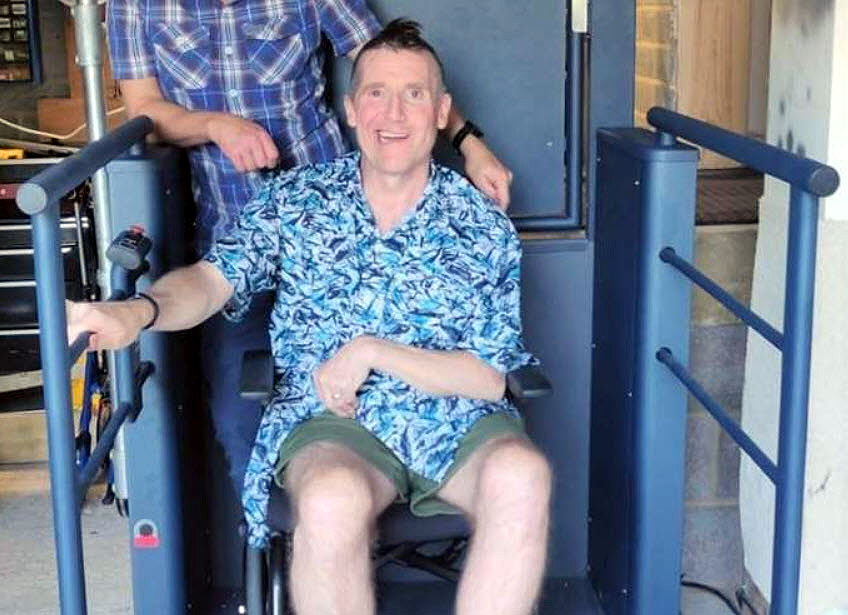
Well-known UK stroke survivor, Dr Tom Balchin OBE, founder of ARNI Stroke Rehab Charity shows us the way: a picture speaks 1000 words...
If you want some help with your recovery call ARNI Charity on 0203 053 0111 or email support@arni.uk.com We have stroke rehab specialist trainers throughout the country who can come to your house and help you with your stroke recovery.
#stroke #strokesurvivors #strokerecovery #strokerehabilitation #Neuroplasticity #strokerehab #strokeexercise #strokerecoveryexercises #neurorehabilitation #strokesurvivorscan #exerciseafterstroke
www.arni.uk.com
... See MoreSee Less
Task-related practice is the ‘number one’ way to retrain the brain. It means simply to train the action to be performed in a natural environment. For example, if you wanted to lift a mug and drink from it, you should take a mug and practice lifting and drinking from it, over and over again … and attempt to improve progressively and consistently.
If you want some help with your recovery call us on 0203 053 0111 or email support@arni.uk.com We have trainers throughout the country who can help you with your stroke recovery.
#stroke #strokesurvivors #strokerecovery #strokerehabilitation #neuroplasticity #strokerehab #strokeexercise #strokerecoveryexercises #neurorehabilitation #strokesurvivorscan #exerciseafterstroke
www.arni.uk.com
... See MoreSee Less